


Ford Maintenance Schedule by Mileage: What to Check at 30K, 60K and 100K Miles
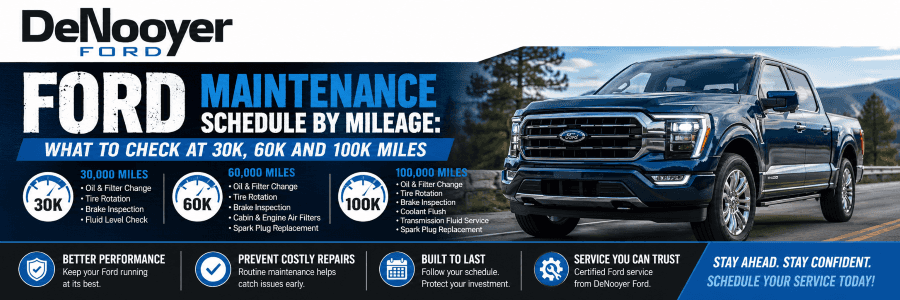
Ford Maintenance Schedule by Mileage: What to Check at 30K, 60K, and 100K Miles
Staying current with your Ford maintenance schedule can help protect performance, reliability, and long-term value. Major mileage milestones are a good opportunity to inspect key systems and address wear before it turns into a larger repair.
Maintenance Needs Change as the Miles Add Up
There is no single service schedule that applies perfectly to every Ford. Your model, engine, age, mileage, driving habits, and operating conditions all influence what your vehicle needs. Your Ford Owner’s Manual should always be your primary maintenance guide, but 30,000, 60,000, and 100,000 miles are useful checkpoints for a closer inspection.
Ford Maintenance Milestones at a Glance
| Mileage | Main Focus | Items to Review |
|---|---|---|
| Around 30,000 Miles | Establish a strong maintenance baseline | Oil, tires, brakes, filters, battery, fluids, belts, hoses, steering, suspension |
| Around 60,000 Miles | Watch for added wear and fluid or filter needs | Fluids, filters, brakes, tires, cooling system components, wear items |
| Around 100,000 Miles | Thorough high-mileage inspection | Spark plugs where applicable, cooling system, brakes, tires, battery, suspension, belts, hoses, fluids |
What to Check Around 30,000 Miles
By 30,000 miles, your Ford has had plenty of exposure to everyday driving conditions. In Michigan, potholes, winter weather, road salt, and temperature swings make a comprehensive inspection especially valuable.
Continue following your Ford’s oil-life guidance and recommended service intervals.
Inspect tread depth, tire condition, pressure, and signs of uneven wear.
Check pads, rotors, braking feel, and any unusual sounds or vibration.
Test battery condition, particularly before Michigan’s colder months.
Inspect filters for dirt or restriction and replace when needed.
Review important fluid levels and look for signs of leaks or contamination.
Inspect for visible wear, cracking, deterioration, or damage.
Look for wear that may result from potholes, rough roads, or regular use.
Why 30K Miles Matters in Michigan
- Potholes can affect tires, wheels, alignment, and suspension.
- Road salt can accelerate corrosion on exposed components.
- Cold temperatures can place additional strain on the battery.
- Temperature swings can cause tire pressure changes.
- Winter driving makes healthy tires, brakes, and wipers especially important.
Keep Up with Routine Service Between Milestones
Mileage milestones do not replace your regular oil changes, tire rotations, inspections, and other recommended services. Think of 30,000 miles as an opportunity for a more complete check of your vehicle’s overall condition.
What to Check Around 60,000 Miles
By 60,000 miles, additional maintenance needs may begin appearing beyond the routine services completed earlier in your Ford’s life.
Technicians can evaluate applicable fluids based on your vehicle, powertrain, and maintenance schedule.
Engine and cabin filters may require inspection or replacement depending on condition and interval.
Brake pads, rotors, and related components should be checked for wear.
Review tread, age, pressure, and wear patterns to determine whether replacement may be approaching.
Inspect relevant cooling system components and address any signs of leakage or deterioration.
A broader inspection can identify components that have experienced normal mileage-related wear.
Pay Attention to Changes in How Your Ford Drives
You do not need to wait for your next mileage milestone if something feels different. Changes in sound, vibration, braking, steering, or performance are good reasons to schedule an inspection.
What Happens at 100,000 Miles?
Reaching 100,000 miles is a major milestone, but it does not automatically mean your Ford is nearing the end of its useful life. Continued maintenance becomes especially important as age and mileage increase.
Certain Motorcraft® spark plugs may have service intervals ranging from approximately 60,000 to 100,000 miles, depending on application.
Inspect cooling components, fluid condition, hoses, and related systems for age or mileage-related wear.
Continue inspecting high-wear safety components and replace them as condition requires.
Regular testing can help identify declining battery performance before a no-start situation occurs.
Higher-mileage suspension components may benefit from closer inspection for looseness or wear.
Age and mileage can affect rubber components and fluids even when the vehicle continues to drive normally.
A 100K-Mile Ford Can Still Have Plenty of Life Ahead
The condition of a higher-mileage Ford depends heavily on its maintenance history, previous use, driving environment, and individual vehicle condition.
Continue following vehicle-specific maintenance recommendations.
High-mileage vehicles benefit from consistent inspections.
Do not ignore warning lights, leaks, unusual sounds, or performance changes.
Maintenance records make it easier to know what has already been completed.
Your Driving Habits Matter
Mileage alone does not determine maintenance needs. Severe or demanding use can place additional stress on your Ford and may change when certain components need attention.
Ford Maintenance for Michigan Driving
Check the battery, tires, wipers, brakes, fluids, and heating systems before colder weather arrives.
Inspect tires, alignment, suspension, brakes, and underbody components after winter potholes and road salt.
Review cooling systems, tires, battery health, and air conditioning before longer trips.
Prepare for changing temperatures with tire, battery, lighting, wiper, and fluid inspections.
Mileage Is Only Part of the Maintenance Equation
| Factor | Why It Matters |
|---|---|
| Mileage | More miles generally mean more operating hours and component wear. |
| Vehicle Age | Rubber components, fluids, batteries, and other items can age even with lower mileage. |
| Driving Style | Towing, hard braking, short trips, and heavy use can increase wear. |
| Road Conditions | Potholes, dirt roads, salt, and rough surfaces affect tires, steering, suspension, and underbody components. |
| Model & Powertrain | Different engines, transmissions, drivetrains, and vehicle types have different maintenance requirements. |
Make Ford Maintenance More Convenient
DeNooyer Ford offers service options designed to make it easier to fit maintenance into a busy schedule.
For eligible services and locations, factory-trained technicians may be able to bring certain maintenance services to you.
Qualifying service appointments may be eligible for vehicle pickup and return.
Access useful vehicle information and maintenance resources from your compatible connected Ford.
Enter your vehicle information online to help identify maintenance needs and schedule an appointment.
Popular Ford Vehicles We Service
When Should You Schedule Service?
Not Sure What Your Ford Needs Next?
Your Ford’s exact maintenance needs depend on its model, year, engine, mileage, and driving conditions. DeNooyer Ford can help you review your vehicle’s service needs and plan your next appointment.
Schedule Ford Service at DeNooyer Ford
Whether your Ford is approaching 30,000, 60,000, 100,000 miles, or another important milestone, staying ahead of maintenance can help keep it ready for every season. Visit DeNooyer Ford in Vicksburg for professional Ford maintenance and service for drivers throughout Vicksburg, Kalamazoo, Portage, and Southwest Michigan.
Maintenance Note: Maintenance requirements and service intervals vary by Ford model, model year, engine, drivetrain, mileage, vehicle age, driving habits, and operating conditions. Always follow your Ford Owner’s Manual and vehicle-specific maintenance guidance. Ford Mobile Service, Pickup & Delivery, and other convenience services are subject to eligibility, availability, location, and service type.
