


Ford Truck Cab and Bed Sizes: How to Choose the Right Combination
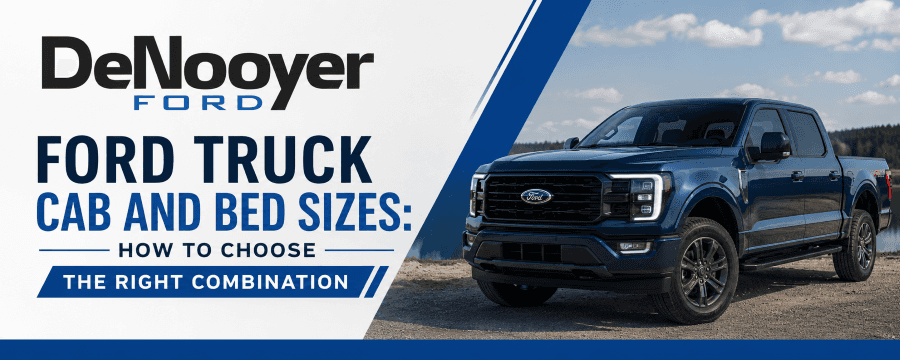
Ford Truck Cab and Bed Sizes: How to Choose the Right Combination
Compare Ford Regular Cab, SuperCab, and SuperCrew® configurations along with short, standard, and long bed options to find the truck setup that fits your work, family, towing, and everyday driving needs.
Start with How You Use Your Truck
The right Ford truck configuration depends on what matters most in your daily routine. Passenger space, cargo capacity, towing needs, parking, commuting, and jobsite use can all influence whether a Regular Cab, SuperCab, or SuperCrew® with a short, standard, or long bed makes the most sense.
Ford Cab Sizes at a Glance
| Cab Style | Best For | Main Advantage |
|---|---|---|
| Regular Cab | Work-focused drivers | Simple layout with maximum focus on bed utility |
| SuperCab | Drivers balancing work and occasional passengers | Extra rear seating without a full-size crew cabin |
| SuperCrew® | Families and frequent passengers | Maximum rear-seat room and four full-size doors |
Regular Cab
Built for Straightforward Work
The Regular Cab is a strong choice for drivers who primarily use their truck for work and rarely need rear seating.
- Single row of seating
- Ideal for one or two occupants
- Supports longer bed configurations
- Practical for contractors and job sites
- Simple, work-focused layout
Choose a Regular Cab If You:
- Frequently haul building materials
- Want maximum bed space
- Usually drive alone or with one passenger
- Need a straightforward work truck
- Prioritize cargo over passenger space
Regular Cab Works Well For
Carry lumber, tools, equipment, and jobsite materials.
Maximize available bed space for supplies and equipment.
A straightforward layout can be useful for commercial applications.
Focus more of the truck’s layout on bed utility instead of passenger space.
SuperCab
Extra Seating Without Going Full Crew Cab
The SuperCab adds a second row and rear-hinged doors, giving drivers more passenger and interior storage flexibility while maintaining strong cargo capability.
- Additional rear seating
- Rear-hinged door design
- Useful interior storage
- Balanced work and recreation use
- More compact than a SuperCrew®
Choose a SuperCab If You:
- Occasionally carry rear passengers
- Need extra interior storage
- Use your truck for work and recreation
- Want passenger flexibility without maximum cabin size
- Frequently carry tools or gear inside the cab
SuperCab Is a Strong Middle Ground
Carry occasional coworkers while keeping strong cargo flexibility.
Store additional equipment inside the cabin when needed.
Balance people, tools, and building materials.
Keep rear seating available without moving to the largest cab.
SuperCrew®
Maximum Passenger Comfort
The SuperCrew® offers four full-size doors and the largest rear seating area, making it a strong option for families, commuters, and drivers who regularly travel with passengers.
- Four full-size doors
- Spacious rear seating
- Better rear-seat access
- Family-friendly interior
- Comfortable for longer trips
Choose a SuperCrew® If You:
- Have a growing family
- Commute daily
- Use child safety seats
- Carpool regularly
- Take long road trips
- Frequently carry adult passengers
Why Many Drivers Choose SuperCrew®
More rear-seat space helps make everyday travel easier for kids and adults.
Full-size rear doors simplify loading passengers and gear.
Additional passenger room is helpful during longer drives.
Use one truck for work, commuting, family travel, and recreation.
Choosing the Right Bed Length
Your truck bed should match the cargo you carry most often. A shorter bed improves maneuverability, while a longer bed provides additional hauling room.
| Bed Type | Best For | Main Advantage |
|---|---|---|
| Short Bed | Daily driving and urban use | Easier parking and maneuverability |
| Standard Bed | Mixed work and recreation | Balanced cargo room and drivability |
| Long Bed | Work and larger cargo | Maximum bed capacity |
Short Bed: Easier for Everyday Driving
A shorter overall truck can be easier to manage in crowded lots and driveways.
A practical choice for drivers who use their truck every day.
Still provides useful room for tools, mulch, furniture, and supplies.
Carry sports equipment, coolers, camping supplies, and everyday cargo.
Standard Bed: Balanced and Versatile
A standard bed is a strong choice for drivers who want enough cargo room for work and recreation without making the truck unnecessarily difficult to maneuver.
Long Bed: Maximum Cargo Space
For drivers who regularly carry large materials or equipment, a long bed prioritizes usable cargo space.
Carry lumber and building supplies more easily.
Move tools, equipment, and larger project materials.
Longer cargo areas may provide more flexibility for recreational equipment.
Useful for drivers who rely on their truck as a work tool.
Matching Cab and Bed Size to Your Lifestyle
| Primary Need | Recommended Cab | Bed Priority |
|---|---|---|
| Maximum Work Cargo | Regular Cab | Long bed |
| Work + Occasional Passengers | SuperCab | Standard or long bed |
| Family + Daily Driving | SuperCrew® | Short or standard bed |
| Commuting + Weekend Projects | SuperCab or SuperCrew® | Short or standard bed |
| Family + Recreation | SuperCrew® | Standard bed |
Don’t Forget About Towing and Payload
Cab and bed configuration can influence available towing and payload capacity. If you regularly tow or carry heavy loads, the exact truck configuration matters.
Different cabin sizes affect vehicle weight and available ratings.
Bed configuration affects overall truck dimensions and available combinations.
Engine selection plays an important role in towing and hauling capability.
Two-wheel-drive and four-wheel-drive configurations may carry different ratings.
Axle ratio and factory tow equipment can also influence capacity.
Which Ford Truck Should You Compare?
A compact pickup option for everyday driving and lighter-duty truck needs.
A midsize truck balancing maneuverability, utility, and adventure capability.
A versatile full-size truck with a wide range of cab, bed, and equipment combinations.
Built for more demanding towing, hauling, and heavy-duty work.
Questions to Ask Before Choosing a Configuration
Compare Cab and Bed Sizes in Person
Sit in the rear seats, open every door, inspect the bed, and consider where you’ll park the truck. Seeing the configurations side by side can make it much easier to choose the right combination.
Find the Perfect Ford Truck at DeNooyer Ford
Whether you need a work-focused Regular Cab, a versatile SuperCab, or a family-friendly SuperCrew®, our team can help you compare Ford F-150, Ranger, Maverick, and Super Duty configurations to find the truck that fits your lifestyle, towing needs, and budget.
Disclaimer: Cab styles, bed lengths, engine options, drivetrain availability, towing ratings, payload capacity, and specific truck configurations vary by Ford model, trim, model year, and individual vehicle. Not every cab and bed combination is available on every Ford truck. Always verify the specific vehicle’s equipment and manufacturer ratings before towing or hauling.
